Some Cream Collon anyone? Found these at a little import store. A Japanese snack. They are little tubes filled with cream. Hmmmm... Interesting name choice.
They are little tubes filled with cream. Hmmmm... Interesting name choice.They are little tubes filled with cream. Hmmmm... Interesting name choice. [Luna - during the fashion show]
 [Aono waiting to be picked up on Children's Day]
 [Maho and I - She was waiting to be picked up. Yes, I had my hair in pigtails. :P]
 We went for lunch at a little Italian restaurant near the Dome and then they headed back to Hakata Station to check into the hotel and get some rest (it seems that most people that go to Fukuoka for their VISA run end up staying in that hotel). I decided to do some more walking and sightseeing. My first stop was Ohori Park, one station from Toujinmachi. I walked, of course, as to go one stop on the train would have cost me 200Yen!!!
 Ohori park is quite large and is basically a huge man made lake with a park through the middle and around the edges.
 At one end, there are HUGE koi and other such fish. There were so many of them it would be nearly impossible to count them all. People were feeding them, so there was also a huge flock of seagulls and pigeons. They kept trying to scare the birds away, though, as the food was meant for the fish.
 [The birds started flying as just as I took the picture. They had been all on the water.]
 [This might give you an idea of the size of the fish. That wasn't even one of the biggest ones!]
 I watched them for a while before heading along through the park that split the lake in two (the first part is a huge bridge, though, not actually park). Along the way, I was a bit confused by the signs. Fishing is allowed only in certain areas of the lake.
 Along the park, there are signs saying fishing/no fishing, no fishing/fishing, fishing/no fishing, etc. What difference does it make, really?
 On a small island in the lake (not accessable), there were also some massive birds. I'm not sure what all of them were, but I know some were herons (on the ground and in the water on the left).
 The Gokoku Shrine covers a very large area. Most of it is just open space. The meaning of Gokoku is something along the lines of guardian of the State. Where I was standing to take this picture is on a big tarmac. Beyond the gate is a huge grassy area with a wide gravel path leading all the way to the building. There is also a gravel path intersecting that one.
 ALL of the gravel is kept raked (there is a lot of it). The lines in the gravel basically followed the edges; running the entire length of the paths, for example. In this pic, I am standing on the steps of the building. There is a set of lines going around the building and then the other ones follow the edge of grassy area.
 At the ruins there isn't much to see other than very high fortress like sides with gardens of different types of flowers and trees on the different levels - plum tree garden, cherry tree garden, azalea garden, iris garden, etc.
 Some of the trees around the place are MASSIVE!!! There is a woman standing beside the tree in the picture (front right), to give you an idea of its size.
 At one of the higher levels of the Castle, (the sign for the area said the Tamon Tower courtyard), there is a very long building along the edge but I'm not sure if it is part of the original Castle or not, as it looks fairly new. Maybe it was re-built?
 There is only one very old looking building on the other side (the Kinen Tower).
 When I finally tired of walking around the ruins, I went to Tenjin Station (2 stops away) which is supposed to be a very good shopping area with underground malls and such. I wandered about for a while and then went for a walk. I decided to try to find the Yanagibashi Market. I didn't find it, but did see quite a bit of the city. By the time I got back to the hotel, I had walked for over 9 hours since the guys had left for the hotel. I was exhausted.
Kushida shrine lies at the heart of old Hakata, the centre of the old city and is from here that the competitors in Fukuoka's most famous festival, the Yamagasa depart on their long early morning run.
Founded in 757, Kushida shrine is not only spectacular but contains a variety of items of interest. Note in particular the Eto Arrow plate with its carvings of the Chinese zodiac and the brace of anchor stones recovered from the harbour that belonged to the Mongolian invasion fleets. Note also the Yamakasa portable shrine.
There is a ginko tree in the forecourt that a 1918 monument claims is 1000 years old. The grand deity, Ohata Nushina-mikoto, is enshrined here.
But it is in mid-July that the shrine is best enjoyed - it hosts the "Oiyama" event of the Yamakasa-gion festival. Hundreds of near naked men clad only in tight loincloths and tighter buttocks vie to carry heavy wooden shrines through the streets over a set route in the fastest times. The main event commences at 4:59am.
[Kyushu.com]


[All photos taken March 11, 2007]
[If you're traveling to Fukuoka and need to find a good hotel, check out Fukuoka Hotels for a large variety of options.]
 Breakfast consisted of [clockwise from top left]: rice (of course), sauteed mushrooms and veggies (kinda good, actually), fermented mung beans with oil and mustard (just tasted like rotten who knows what), plain tofu (I did eat that, with some soy sauce), 2 pieces of fried egg (the little rectangles), some sort of fish egg, shredded dried seaweed, yellow something or other (maybe candied ginger?), a huge chunk of fish, and a bit of bean paste soup (slightly fishy but not so much that I couldn't eat it). Since I don't usually eat much to begin with, what I was able to eat was enough.
 I think the covered shopping streets are a great idea. They are easier to keep clean and don't have to worry about covering things when it rains.
  Behind one of the covered shopping streets was a small river/canal, of which there are several in the city.
Tserennadmidin Tsegtmed, 1958-
(Mongolia)
Orkhon
1993,
oil on canvas
The Orkhon River is 1123 km in length and flows through the eastern Khangai ranges of Mongolia. The scene depicted here shows an actual site, the Red Falls on the upper reaches of the river. These falls are highly revered by Mongolians, whose grassy plains do not contain many waterfalls. Tsegmed is known for his depiction of the lively exchange between nature and people in Mongolia. The primary theme of this work lies on the sublime power of nature long revered by Mongolians. Similarities can be found between the artist's expression in this painting and the feminine lines of the traditional Buddhist figures unique to Mongolia.
 I was very pleased with my sandwich and mocha. :)
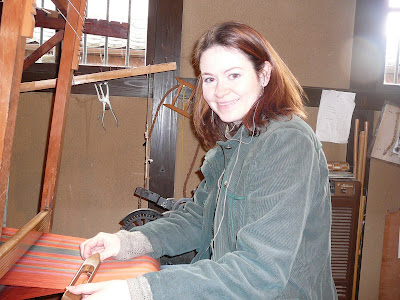 The ones I saw were Hakata-ori textile weaving (which I got to try) and Hakata doll making. Hakata is a district of Fukuoka, and at one time, I think, was a merchant town.
  My room was so tiny,
 as was the bathroom, which seems to be some sort of prefabricated plastic bathroom, with a fancy toilet and
  a small but deep tub.
 especially #1: "Sit down on the seat."
Becoming a Professional Player in Korea
During 60 years of professional baduk history in Korea, there have only been about 210 professional players. Only 35 of them were female. As in other sports, becoming a professional baduk player means taking a long and difficult road.
In Korea, a certified student who studies baduk at Hankuk Kiwon (Korea baduk Association) seeking to become a professional player is called a yongusaeng. At any time in the yongusaeng league, there are 120 boys divided into 10 classes and 48 girls divided into four classes, class 1 being the strongest (for both the boys and girls) and 10 the weakest (4 for girls).
A tournament among the yongusaeng takes place every month, and classes are reorganized each time according to the results. The top four players of each class will move up to the next class, while the worst four will be demoted to a lower class. When a new yongusaeng joins the league, he or she will get the lowest position in the weakest class to start with, regardless of his/her strength.
A qualification tournament to select new yongusaeng takes place every four months. To be selected, an applicant must be under the age of 18 and be in the top 12 of the hundreds of players participating in the qualification tournament.
Every month, four of these newcomers have the honor of joining the weakest yongusaeng class in place of the students cut in the monthly yongusaeng tournament. All 12 new students are incorporated into the yongusaeng classes, four at a time, over three months.
The competition among all the yongusaeng _ including the lowest ranked newcomers _ to join a higher class and not to be kicked out of the league, is incredibly intense. During week, when there are no league games, the yongusaeng spend most of their time studying baduk. They replay the professional games, review their own games from the yongusaeng league, study new joseki variations, solve life and death problems and play other yongusaeng.
Some of the yongusaeng, whose ages range from eight to 18, even give up regular education to have more time to study the game. They study baduk from morning to night, except for a little exercise during the day to keep their health.
There are about 15 private baduk academies in Korea (otherwise known as baduk tojang), with between 10 to 20 yongusaeng. Most of the teachers at these private academies are professional players, and they play teaching games and review them with their students.
Each academy also has other students who aspire to join their ranks of the yongusaeng. Their number ranges from 50 to 150. That means there are more than 1,000 students at any given time who want to become yongusaeng.
However, the number of players who are able to go professional is very small. The number of newly made professional players differs each year according to the situation of the Korean baduk scene, but it is always less than ten.
In recent years, new professional players were born in the following manner.
The three players with the highest scores in the yongusaeng tournament, and five who qualified in the annual professional qualification tournament become professional players. Since a student older than 18 cannot stay a yongusaeng, a player over that age is technically barred from becoming a professional player.
The fiercer the competition, the more miserable the students who do not succeed by the time they turn 18. Most of them develop future careers that have something to do with baduk because they love the game so much.
However, even for those few students who are able to go professional, there is still a long and difficult way to go, for the competition becomes even more cutthroat once they enter the professional baduk world.
The writer is a baduk professor at Myongji University and a professional player of the game.
[The Korea Times]


 in Ohori Park, Fukuoka, Japan
 I found this site and like the girl's art...
